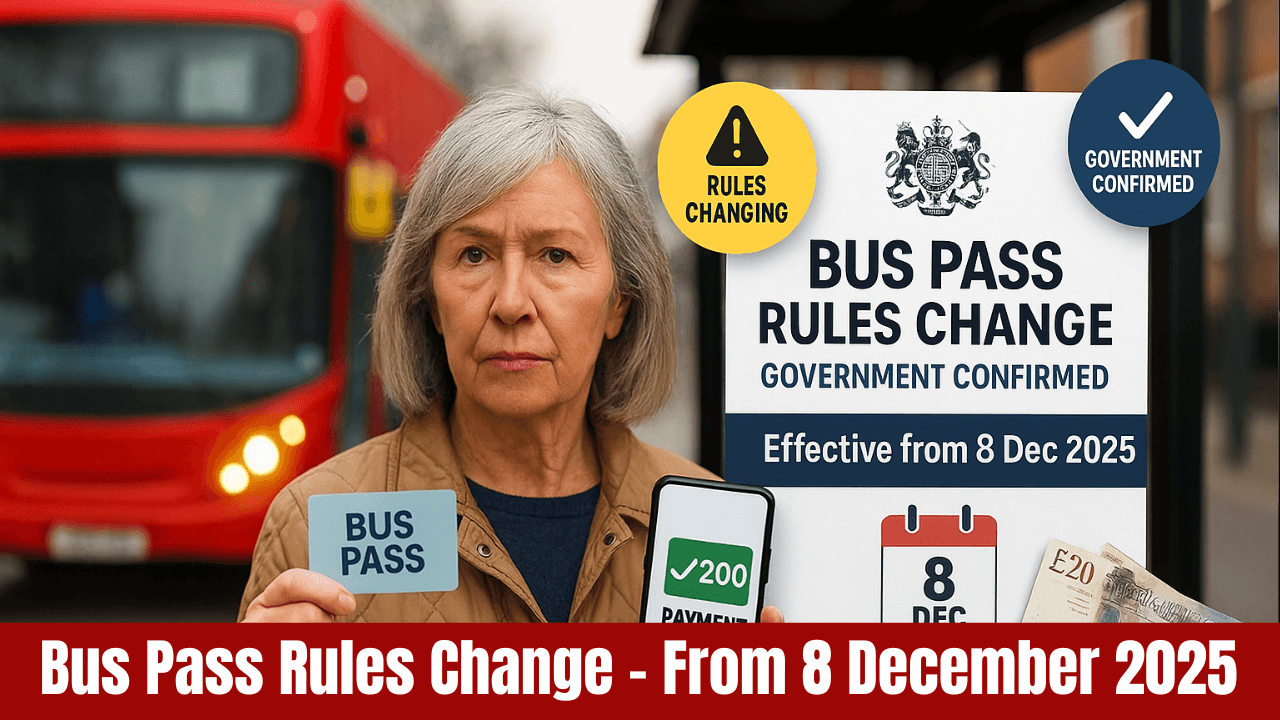
The UK Government has officially confirmed that important changes to the National Bus Pass scheme will come into force from 8 December 2025. This announcement directly affects millions of older residents and eligible disabled travellers who rely on free or discounted public transport to manage daily life.
The Bus Pass is a crucial lifeline for many people across England, offering free off-peak travel on local buses. With cost-of-living pressures still impacting households, even small rule changes can have a major effect on finances and mobility. That is why this update has already attracted strong public attention.
In this guide, we explain exactly what is changing, who will be affected, how to prepare, and what it means for existing pass holders and new applicants.
What the UK Bus Pass Scheme Currently Offers
At present, the English National Concessionary Travel Scheme allows eligible residents to travel free on local buses during off-peak hours. This generally means travel is free between 9:30am and 11:00pm on weekdays, and all day on weekends and bank holidays.
Eligibility usually includes:
- People who have reached State Pension age
- Disabled people who meet specific mobility or health criteria
Local councils issue the passes, but the scheme is funded through national government support. In many areas, additional local benefits are also included, such as reduced tram or ferry travel.
Why the Government Is Changing Bus Pass Rules in 2025
According to official statements, the changes are being introduced to modernise the system, reduce misuse, and align public transport support with wider transport and pension reforms. The Government has also highlighted the need to ensure long-term financial sustainability of concessionary travel schemes.
Passenger behaviour, travel patterns after the pandemic, and rising operational costs for councils have all contributed to the decision. Digital systems and data checks will now play a larger role in how passes are issued and used.
Key Bus Pass Rule Changes from 8 December 2025
From 8 December 2025, several confirmed changes will apply across England. These are designed to tighten eligibility checks and improve enforcement.
The main confirmed updates include:
- Stronger identity verification at application stage
- Mandatory revalidation of some existing passes
- Digital records linked to National Insurance numbers
- Expanded penalty powers for misuse
- Updated rules on lost, stolen, or damaged passes
While free travel itself is not being removed, the way eligibility is checked and maintained is being strengthened nationwide.
Impact on Existing Bus Pass Holders
If you already hold a valid bus pass, you may not need to reapply immediately. However, some pass holders will be required to complete a revalidation process starting from December 2025.
Councils will begin contacting selected pass holders to confirm:
- Date of birth
- Current address
- Residency status
- Continued eligibility
If requested information is not supplied within the given time frame, passes may be temporarily suspended until verification is completed.
What New Applicants Need to Know from December 2025
Anyone applying for a new bus pass after 8 December 2025 will face slightly stricter checks than before. Applicants will be required to submit:
- Proof of age or disability
- Proof of UK residency
- National Insurance number (where applicable)
- Digital or paper identity verification
Local councils will also gain access to central government databases to reduce fraud and duplicate applications.
Changes to Lost and Replacement Bus Passes
Under the new rules, replacement passes will still be available, but tighter controls will be in place. Repeated loss or damage claims may trigger further checks to confirm legitimate use.
Some councils may also introduce small administrative fees for replacements, although fee caps will apply nationally to prevent excessive charges.
Will Free Travel Times Change?
At present, there is no confirmed national change to free travel times. Off-peak travel rules are expected to remain broadly the same, with free travel from 9:30am on weekdays and unlimited weekends and holidays.
However, the Government has stated that local authorities may be given slightly more flexibility to manage peak-time pressures in high-demand areas. Any such changes would need local consultation and public notice before implementation.
How Disabled Pass Holders Are Affected
Disabled people who qualify for a bus pass under existing criteria will continue to receive support. The qualifying categories remain unchanged, including:
- Blind or partially sighted
- Mobility impairments
- Learning disabilities
- Severe hearing loss
- Conditions affecting safe travel
However, all disabled applicants may now be required to submit updated medical or benefit-based evidence during renewals. Where eligibility is linked to benefits such as Personal Independence Payment (PIP), direct verification systems may be introduced to streamline checks.
Will the State Pension Age Affect Bus Pass Access?
Bus pass eligibility in England remains linked to the State Pension age. As the State Pension age continues to rise under existing government policy, people born after certain dates may need to wait longer before qualifying for a free bus pass.
This means some individuals in their early 60s may no longer qualify as early as previous generations did. The December 2025 reforms do not change this link but reinforce eligibility alignment with pension age rules.
How Councils Will Enforce the New Bus Pass Rules
Local councils will take on a stronger enforcement role from December 2025. This includes:
- More frequent spot-checks
- Digital scanning of passes
- Real-time verification of validity
- Penalties for misuse
Using someone else’s pass, lending a pass, or continuing to use an expired pass may result in fines and possible suspension from the scheme.
Penalties for Misuse Under the New Framework
The Government has confirmed that misuse penalties will increase under the new framework. In serious cases, misuse could lead to:
- Immediate pass cancellation
- Fixed penalty charges
- Temporary bans from reapplying
- In extreme cases, prosecution
The aim is not to punish genuine users but to target fraudulent activity that costs councils millions of pounds each year.
Digital Changes and Online Bus Pass Management
One of the biggest shifts under the new rules is the move towards digital management. Many councils will offer:
- Online renewals
- Digital status checks
- Electronic replacement requests
- SMS or email expiry reminders
Paper-based systems will still exist for those without internet access, but digital services will become the primary route.
How These Changes Affect Low-Income and Vulnerable Residents
The Government has stated that no one should lose access to free travel purely because they struggle with paperwork or digital systems. Councils are required to offer assisted applications for:
- Elderly residents
- People with disabilities
- Individuals without online access
- Vulnerable households
Community centres, libraries, and council offices will continue to provide in-person support.
What This Means for Daily Travel Costs
For most existing pass holders who remain eligible and comply with revalidation requests, daily travel costs should not increase. Free off-peak bus travel will continue.
However, anyone who fails to revalidate their pass on time could temporarily lose free travel and may need to pay standard fares until their status is restored.
Public Reaction to the Bus Pass Changes
Public response to the announcement has been mixed. Many older residents welcome tighter fraud checks, as they help protect the scheme for genuine users. However, there are concerns that some vulnerable people may struggle with the extra verification steps.
Transport campaigners have urged councils to prioritise communication and ensure no legitimate user is accidentally excluded.
How to Prepare for the December 2025 Changes
To avoid disruption, pass holders are advised to prepare early by:
- Checking the expiry date on their current pass
- Updating contact details with their local council
- Gathering proof of age or disability
- Monitoring council letters and emails
- Assisting elderly relatives with applications
Early preparation can prevent unnecessary travel problems once the new rules come into force.
Regional Differences Across England
While the core rules are national, each council may apply additional local conditions. Some councils may allow:
- Extended travel hours
- Companion passes
- Additional transport modes such as trams
It is essential for users to check their own local authority’s website for area-specific benefits and conditions.
What Is Not Changing in December 2025
Despite headlines suggesting major cuts, several important elements remain unchanged:
- Free off-peak travel continues
- Eligibility categories remain broadly the same
- Disabled travellers retain protection
- Councils remain responsible for issuing passes
The reforms are focused more on administration and fraud prevention than on removing benefits.
Common Myths About the New Bus Pass Rules
There has already been misinformation circulating online. Some key myths include:
- “Free bus travel is being abolished” – This is false
- “All pass holders must reapply” – Only selected cases require revalidation
- “Bus passes will cost money” – The core scheme remains free
- “Over-60s will lose their passes immediately” – This is incorrect
Always rely on official council and government communications.
Long-Term Outlook for the UK Bus Pass Scheme
The Government has signalled that concessionary travel will remain part of the UK’s wider social support system. However, future reviews are likely as transport funding pressures continue.
Digital verification, data-sharing between departments, and closer alignment with pension systems are expected to shape how the scheme operates beyond 2025.
Final Thoughts on the December 2025 Bus Pass Changes
The UK Government’s confirmed Bus Pass rule changes from 8 December 2025 focus mainly on improving security, accuracy, and long-term sustainability of the scheme. For most genuine users, daily travel benefits will remain unchanged, provided they respond to any revalidation requests.
While the reforms introduce extra administrative steps, they are intended to protect public funds and ensure the scheme continues to support those who genuinely need it.
If you or a family member rely on a bus pass, now is the right time to stay informed, keep personal details up to date, and be ready for any contact from your local council as December 2025 approaches.